The IAR Regulator View gives coordination and oversight bodies such as Education, ALGIM, Archives NZ a live picture across their entire regulated population, from one place, without logging into any single agency instance. It complements the IMMA and Public Records Act reporting, rather than replacing them: a living register that sits underneath the assessment, between assessments.
Today the system is visible only in snapshots. Between assessments, the picture goes dark.
IMMA gives a point-in-time maturity snapshot. It does not show what agencies actually hold, or how it is being stewarded day to day.
Disposal decisions sit inside each agency. The regulator sees them only when someone exports a report and sends it.
Self-reported returns are reassembled by hand, long after they would have been useful for targeting support.
No single view shows where the sector is strong, where it is exposed, and where intervention would matter most.
Every other information management tool is sold to the regulated entity, and the regulator sees nothing until a report is exported and sent. IAR inverts that relationship. When you can see across the whole regulated population in real time, IAR stops being a compliance tool for agencies and becomes system-level infrastructure for the regulator itself.
It complements IMMA rather than replacing it. IMMA remains the statutory maturity assessment. IAR is the living register and the continuous population view that sits underneath it, between assessments.
The same screens regulated organisations use, scoped to the whole sector. Five views give a complete operational picture of the population you oversee.
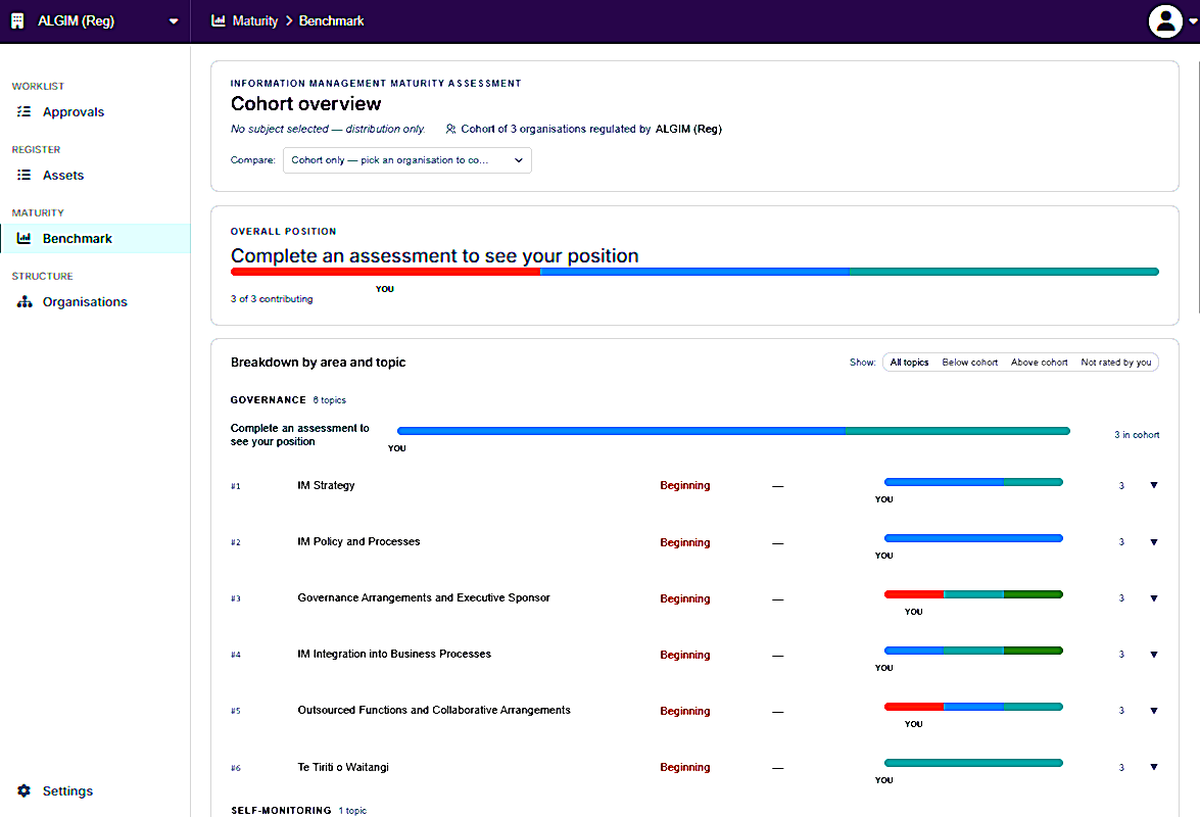
Every organisation's most recent IMMA result, with a population distribution beneath it across all topics and domains. Each stacked bar shows how the sector is spread across maturity levels, and a dot marks where any single organisation sits against its peers.
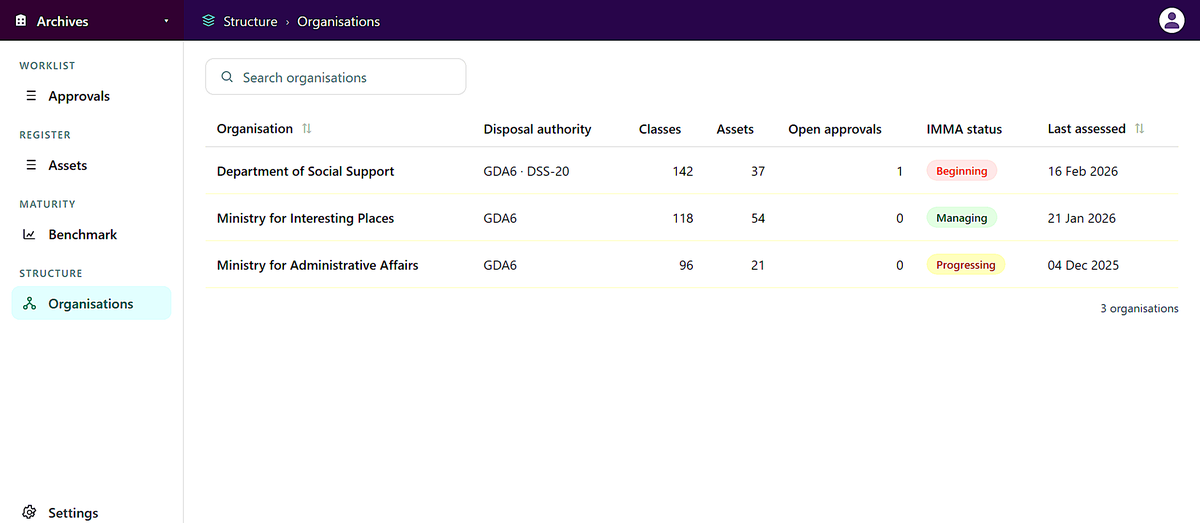
Classes, assets, open approvals, and current IMMA status for the whole population in a single sortable list. Sorting by IMMA status or latest assessment date surfaces the organisations that are overdue and may need attention.
Every disposal approval request submitted across the sector in a single queue, with type, status, submitter, and dates. The ability to approve, decline, or request more information directly in the platform is in active development.

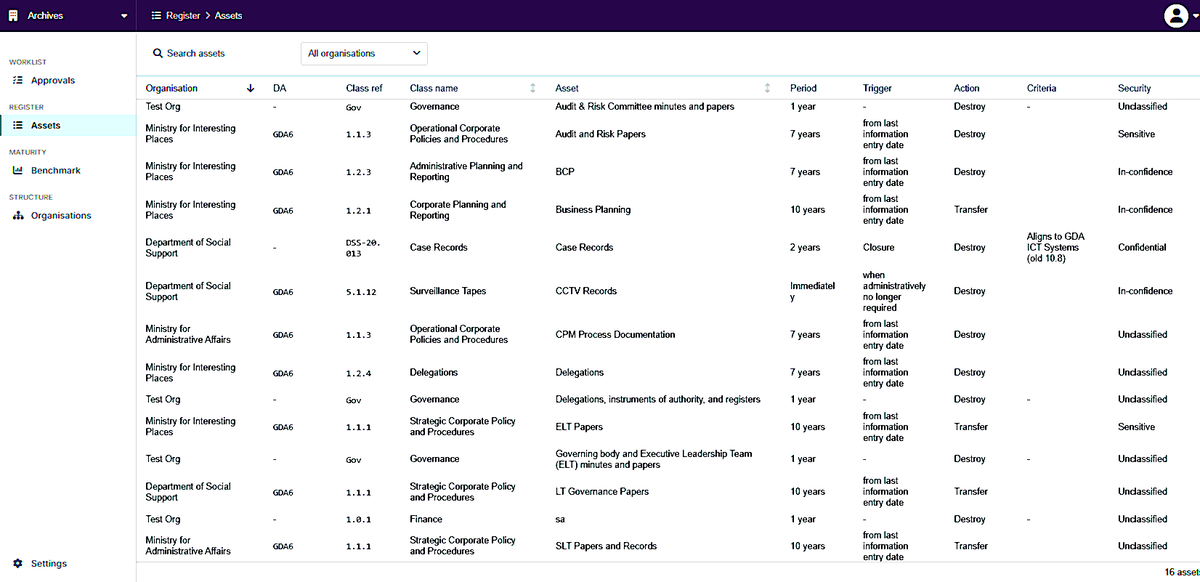
A flat, sortable, read-only table of every registered asset across organisations, with retention period, trigger, disposal action, criteria, and security classification. Empty classes, where nothing has yet been recorded, are flagged so gaps in coverage are easy to spot.
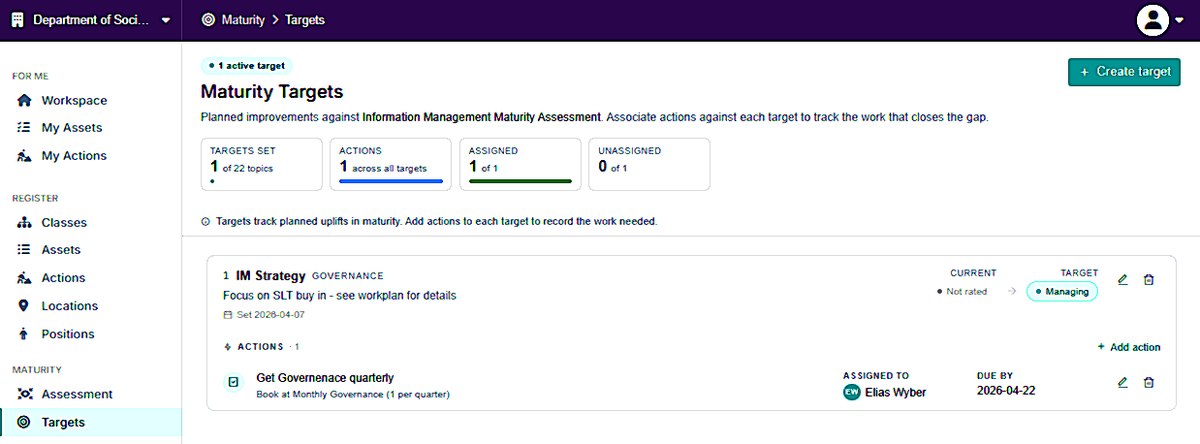
Maturity improvement targets and the actions behind them, across the whole population, with at-a-glance counts of targets set, total actions, and how many are assigned to a named owner.
Once the regulated population sits in one place, IAR can answer questions no single agency tool can. This is the system-level intelligence only the regulator tier can produce.
The total volume and condition of the national information holding: what exists, where it sits, and how well it is stewarded, aggregated across every organisation.
How information moves through its lifecycle, from active use to archival or disposal, and where disposal is stalling across the sector.
The systemic cost of poor maintenance: the retention, risk, and duplication the sector carries because assets are not disposed of when they should be.
The Regulator View suits any body responsible for a population of information-holding entities, and the analytics are a natural co-design opportunity, shaped around the questions each regulator most needs answered.
A live, whole-of-system view across public offices and local authorities, sitting underneath IMMA between statutory assessments.
Bodies overseeing local government, education, or other sector populations get the same consistent, current picture across their entities.
We would welcome a conversation about a regulator-tier pilot: a live population view across a small group of organisations, shaped around the questions you most need answered.